Great Wall of China Facts: Length, Age, Materials and Numbers
Great Wall of China facts: the real surveyed length, when it was built, why it is a UNESCO site, and which section near Beijing is oldest.
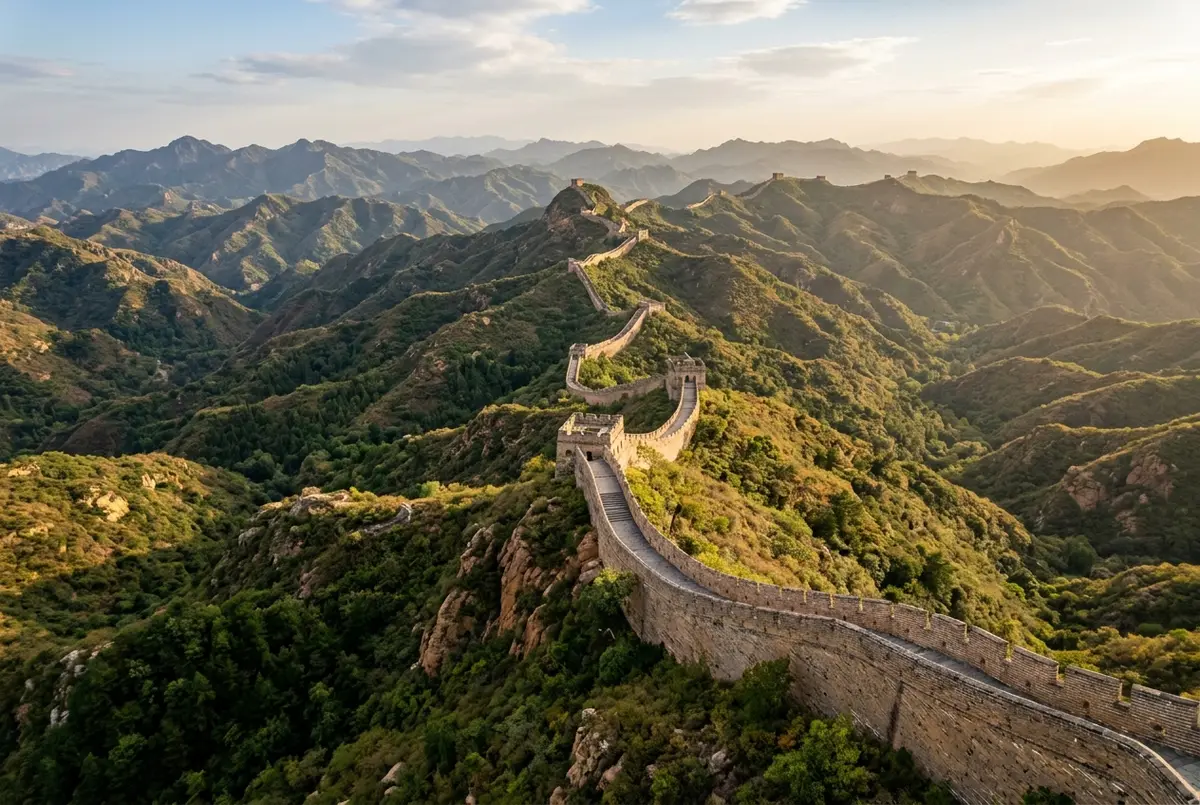
The Great Wall of China measures 21,196.18 km, per a 2012 state survey counting every branch, was built across dynasties from the 3rd century BC to the 17th century AD, and has been a UNESCO site since 1987.
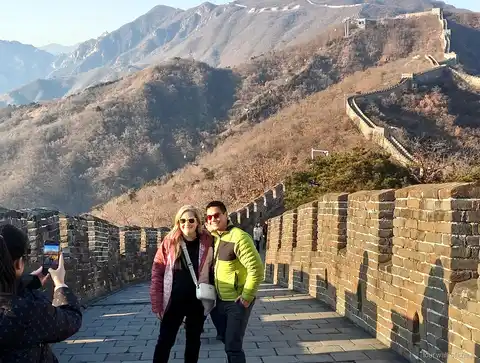 Mutianyu Great Wall Admission Ticket (Optional Cable Car) From $16.90 · Cheapest way onto the Wall See dates
On this page 7 sections
The Great Wall of China is older, longer and far more layered across dynasties than any single statistic really captures. But a 2012 state survey finally nailed down an official, measured length, and that number is the one worth repeating.
The Great Wall in numbers
Source:Chinaculture.org, state cultural information portalHow long is the Great Wall of China?
A 2012 state survey measured the whole system, branches included, at 21,196.18 kilometers. That replaced an older 8,851.8 km estimate, back from when surveyors were still mapping the main Ming-era line and hadn’t yet traced every section, trench and watchtower attached to it.
| Figure | Length | Source |
|---|---|---|
| Earlier estimate (2008) | 8,851.8 km | Preliminary estimate, cited in the 2012 survey report |
| Official survey (2012) | 21,196.18 km | State Administration of Cultural Heritage, with the former State Bureau of Surveying and Mapping |
When was the Great Wall built, and which dynasty built it?
Continuously, from the 3rd century BC all the way to the 17th century AD — a military project that outlasted dynasty after dynasty. At Mutianyu, near Beijing, the current wall dates to 1368, built on earlier Northern Qi foundations, and most of what you actually walk today is Ming-era work.
Say you’re putting together a quick fact sheet the night before a Beijing trip. You want a number you can point to, not whatever a random listicle grabbed last. The 21,196.18 km figure traces back to a named 2012 survey. The smaller 8,850 km number is older and less complete. Citing the first one, with the year attached, is the whole difference between a sourced fact and a guess dressed up as one.
Why is the Great Wall of China historically significant?
Beijing’s own heritage authority puts it as reflecting collision and exchanges between agricultural and nomadic civilizations in ancient China — physical proof, really, of the strategic thinking and military engineering behind successive Chinese empires. It’s also described as a national symbol of safeguarding the country and its people, which is a bigger claim than “old wall,” but that’s the framing the authority itself uses.
“collision and exchanges between agricultural and nomadic civilizations”
Beijing Municipal Government, World Cultural Heritage of Beijing, 2020 · source
Is the Great Wall of China a UNESCO World Heritage Site?
Yes. Beijing’s municipal government confirms it was inscribed on the UNESCO World Heritage List in 1987, one of China’s earliest entries on the list.
How many heritage sites make up the Great Wall system?
43,721. The 2012 survey counted that many individual heritage sites nationwide tied to the wall, scattered across 15 provinces, autonomous regions and municipalities. Wall sections, trenches, related structures — not one continuous line, whatever the postcards suggest.
Which Great Wall section is closest to Beijing, and how old is it?
Mutianyu. Sits in Huairou District northeast of central Beijing, on Northern Qi dynasty foundations, and was rebuilt into its current form in 1368 under the Ming. Three kilometers of fully restored wall, and widely regarded as a highlight of the whole Ming Great Wall.
For the full picture of how the wall’s true length gets calculated, see how long the Great Wall really is, and for where it actually runs, the map and location guide. Heard the space-visibility claim? The myth-busting page covers it in full. For what sections actually look like, see Great Wall of China photos, and for its screen appearances, the Great Wall in movies.
Facts first, planning second — the best section guide lines up Badaling, Mutianyu, Jinshanling and Jiankou against each other directly.
Questions
Is the Great Wall of China one single continuous wall?
No, and this trips people up constantly. It’s a system of walls, trenches and watchtowers built across centuries of different dynasties, which is exactly why the 2012 survey measured 21,196.18 km of combined branches instead of one neat line.
How many people died while building the Great Wall?
There’s no official, measured death toll for the whole wall across every dynasty. Treat any specific number floating around online as a guess dressed up in confidence, not a verified fact.
What materials were used to build the Great Wall?
Whatever the local terrain handed over: stone and brick in the mountainous stretches near Beijing, rammed earth out in the flatter desert regions further west.
Can the Great Wall of China be seen from space?
Not with the naked eye — sorry, popular belief is wrong on this one. See the dedicated page for the full explanation of what’s actually visible from orbit.