Great Wall of China Photos: What It Actually Looks Like
Great wall of China photos: the crowds postcard shots hide, real stone versus rebuilt sections, and which section photographs best.
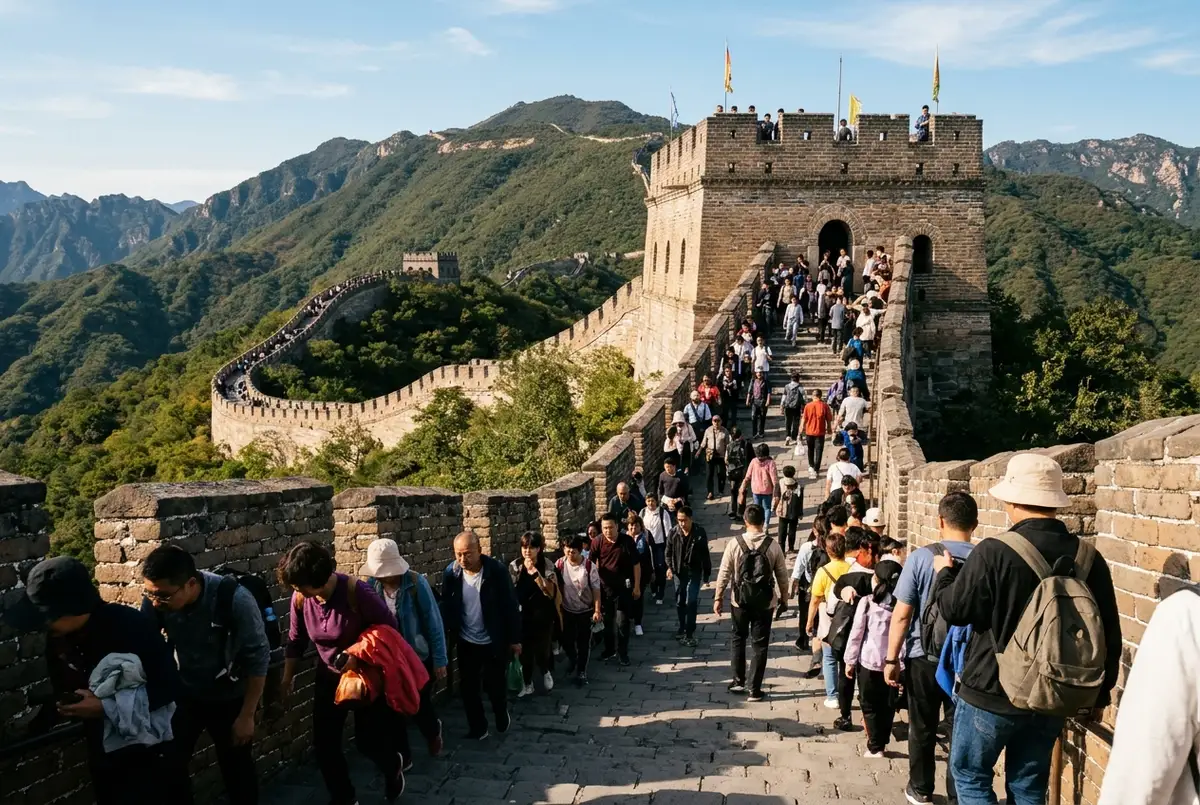
It changes completely by section. Dramatic stone ramparts and watchtowers wind over steep hills near Beijing, but the empty, wide-angle photos rarely show that Badaling alone draws nearly 10 million visitors a year.
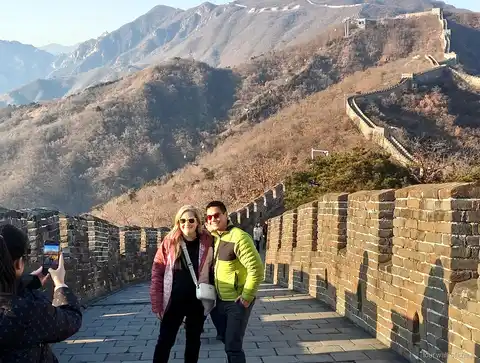 Mutianyu Great Wall Admission Ticket (Optional Cable Car) From $16.90 · Cheapest way onto the Wall See dates
On this page 6 sections
What does the Great Wall of China actually look like? Dramatic in photos. Genuinely crowded in person, at least at the sections everyone photographs. I’d treat the wide, empty postcard shots as the exception here, not the rule.
What the postcard shots leave out
Source:China Daily and National GeographicWhat does the Great Wall of China actually look like?
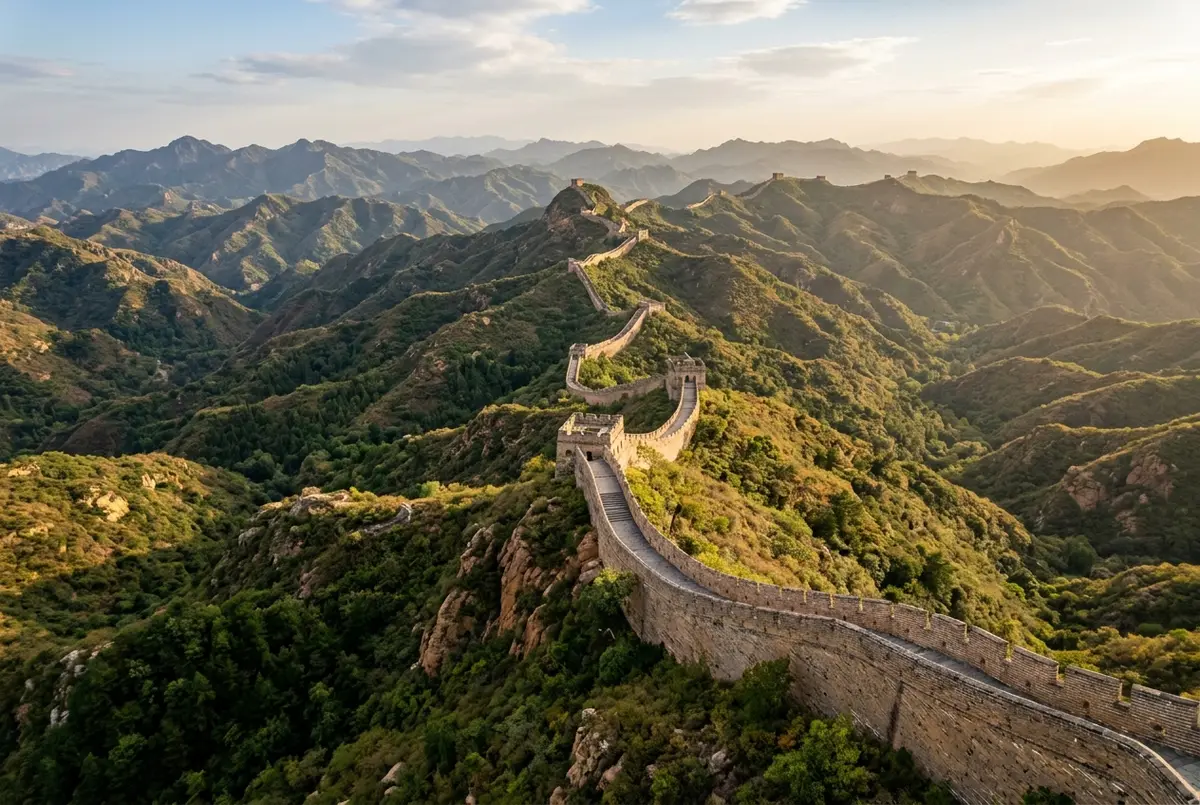
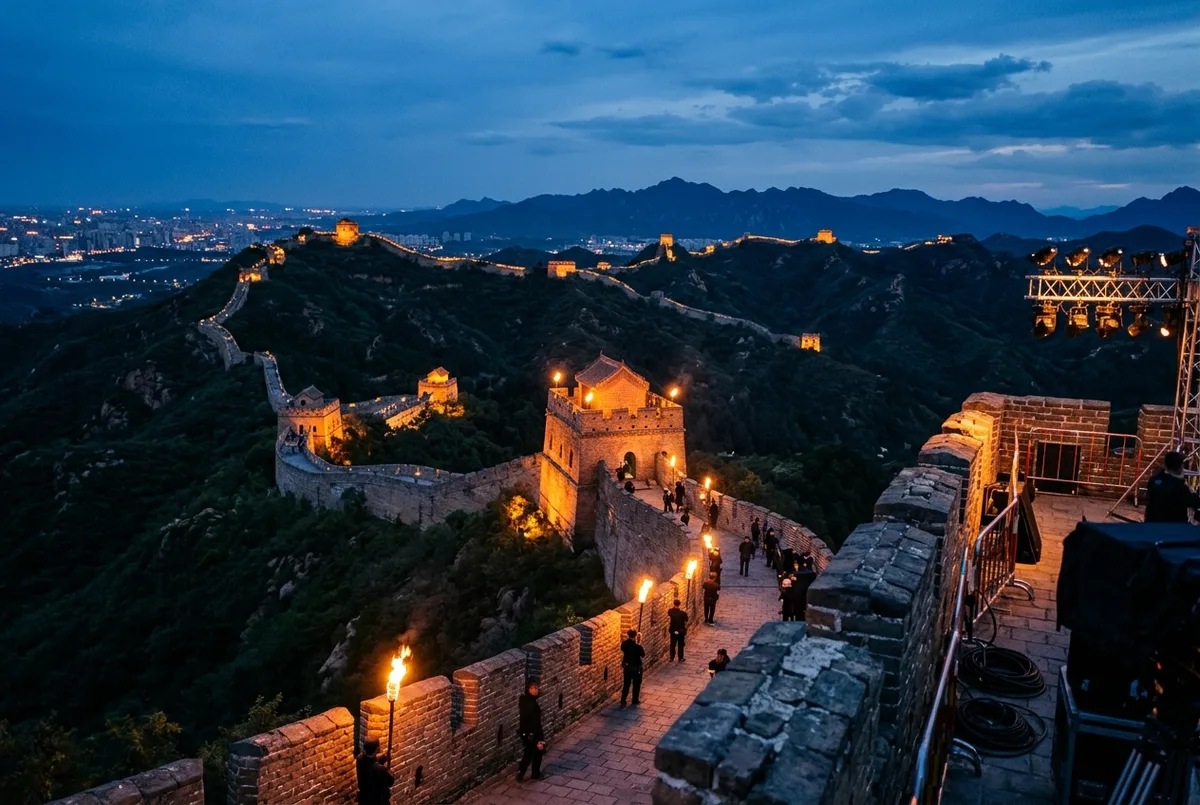
Depends entirely which bit you’re looking at. Near Beijing you get these dramatic stone ramparts and watchtowers climbing over steep hills; further out, there are crumbling earth mounds that barely look like a wall at all honestly. Beijing’s own foreigner-facing photo gallery calls it stretching endlessly on the steep cliffs, which is fair, if a little romantic.
Here’s the thing though. You scroll through a hundred wide, empty Great Wall photos while planning the trip, and then show up to a stairway jammed with people at Badaling. The crowd didn’t vanish between the photo and your visit, the photographer just waited it out until there was a gap.
“Like a vigorous dragon, stretching endlessly on the steep cliffs.”
Beijing Municipal Government, 2020 · source
How crowded does the Great Wall of China get?
At Badaling, the section everyone photographs, visitor numbers are capped at 65,000 a day and the site still pulled in more than 9.9 million visitors in a single year. Do the math on that and the “empty wall” postcard look starts to feel like a magic trick.
Go early, on a weekday, if an empty frame actually matters to you. The cap exists because the default crowd is heavy, not because anyone’s worried about a quiet Tuesday.
Is the Great Wall of China real stone or rebuilt?
Mostly rebuilt, if we’re being honest about it. The stone-and-brick wall people photograph is largely a Ming-dynasty reconstruction. National Geographic puts roughly half the original ancient structure as gone already and more of it is crumbling as we speak.
So that sharp, flawless photo you’re looking at? Almost certainly a restored Ming-era stretch, not the original. The real thing is older, rougher, and nowhere near as intact as whatever steps you’d actually walk on.
Which section looks best in photos, Badaling or Mutianyu?
Badaling wins on drama. It’s the classic, crowd-filled shot, the one closest to the postcard in your head. Mutianyu is calmer, fully restored, granite watchtowers, and it tends to photograph greener because it sits up in the Huairou hills. If you want to see it for yourself, the Mutianyu entry ticket covers the gate and the inside shuttle.
| Section | Crowd level | Walking surface | Extra |
|---|---|---|---|
| Badaling | High, capped at 65,000/day | Restored stone steps | Earliest-open, most popular |
| Mutianyu | Lower | Restored, granite watchtowers | Shuttle bus, optional cable car |
Mutianyu, if you want the calm shot. Badaling, if the crowd doesn’t bother you and you’d rather have the more iconic backdrop in frame. I know which one I’d pick, but your mileage may vary.
What do unrestored sections of the Great Wall look like?
Rough. Honestly a bit sad, in places. Away from the rebuilt tourist stretches, so-called “wild wall” sections are often crumbling and sit well off the typical tourist path. Nothing like the smooth ramparts you see in most photos.
Most visitors never reach these on a standard day trip, and honestly they can be genuinely risky to explore without local knowledge. I wouldn’t go looking for them alone. For the fuller picture of the wall’s numbers and history, there’s the Great Wall of China facts hub and where it actually runs on a map. And if the dramatic look of the wall reminds you of a film set… it’s worth knowing how the 2016 movie recreated it rather than filming on the real thing.
Questions
Is the Great Wall of China one continuous wall?
No, and that trips people up. It’s a network of separate sections, trenches and natural barriers built across different dynasties, which is partly why it looks so different photo to photo.
Do photos of the Great Wall show the whole structure or just one part?
Just one part, basically always. Every photo online is some specific restored section, usually Badaling or Mutianyu, never the full 20,000-plus km network. Nobody’s photographing all of it.
Why do so many Great Wall photos look empty when the site is crowded?
Patience, mostly. Photographers wait for a gap or shoot at the crack of dawn, so the final shot rarely matches the actual visitor count at a popular section like Badaling.
Can you tell which section a Great Wall photo was taken at?
Sometimes, yeah. Badaling’s steeper, more built-up stairways read differently from Mutianyu’s greener, more forested look. Though plenty of generic shots never say which section they’re from.