Where Is the Great Wall of China? Map, Location and What's Nearby
Great wall of China location map: which provinces it crosses, how close it runs to Beijing, and where Badaling and Mutianyu sit relative to each other.
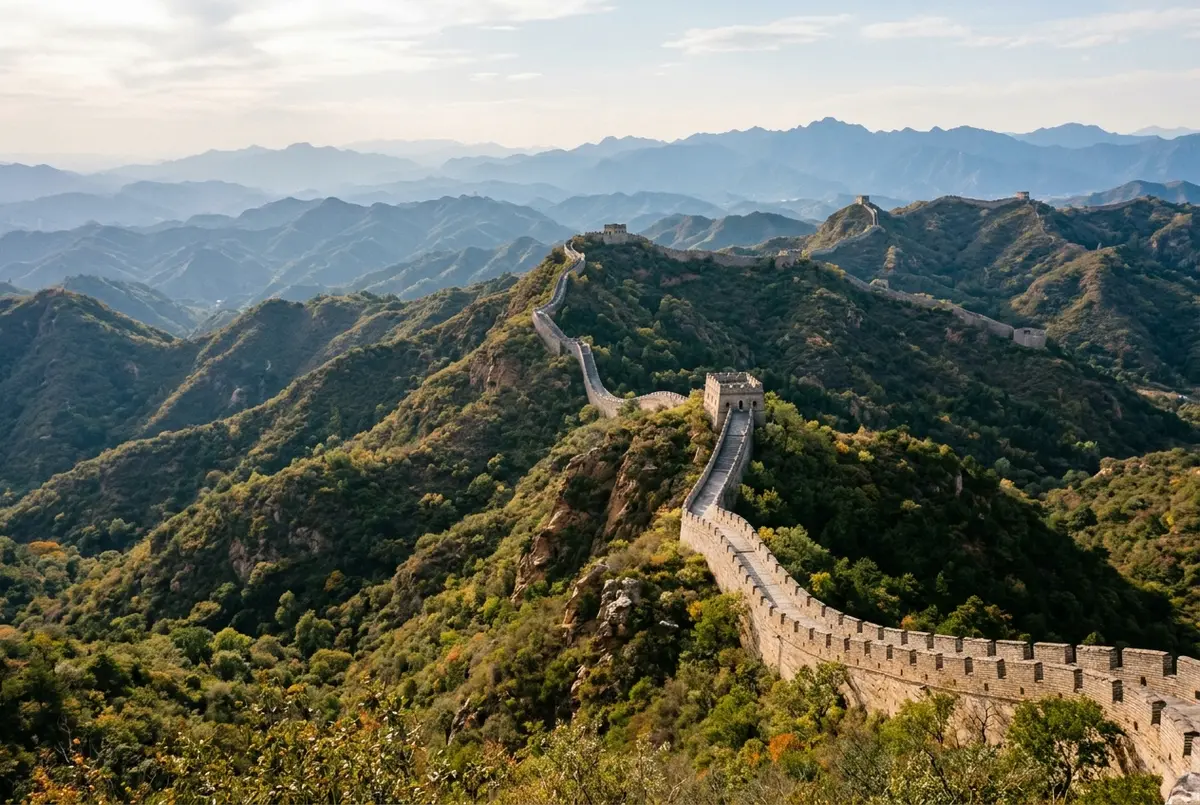
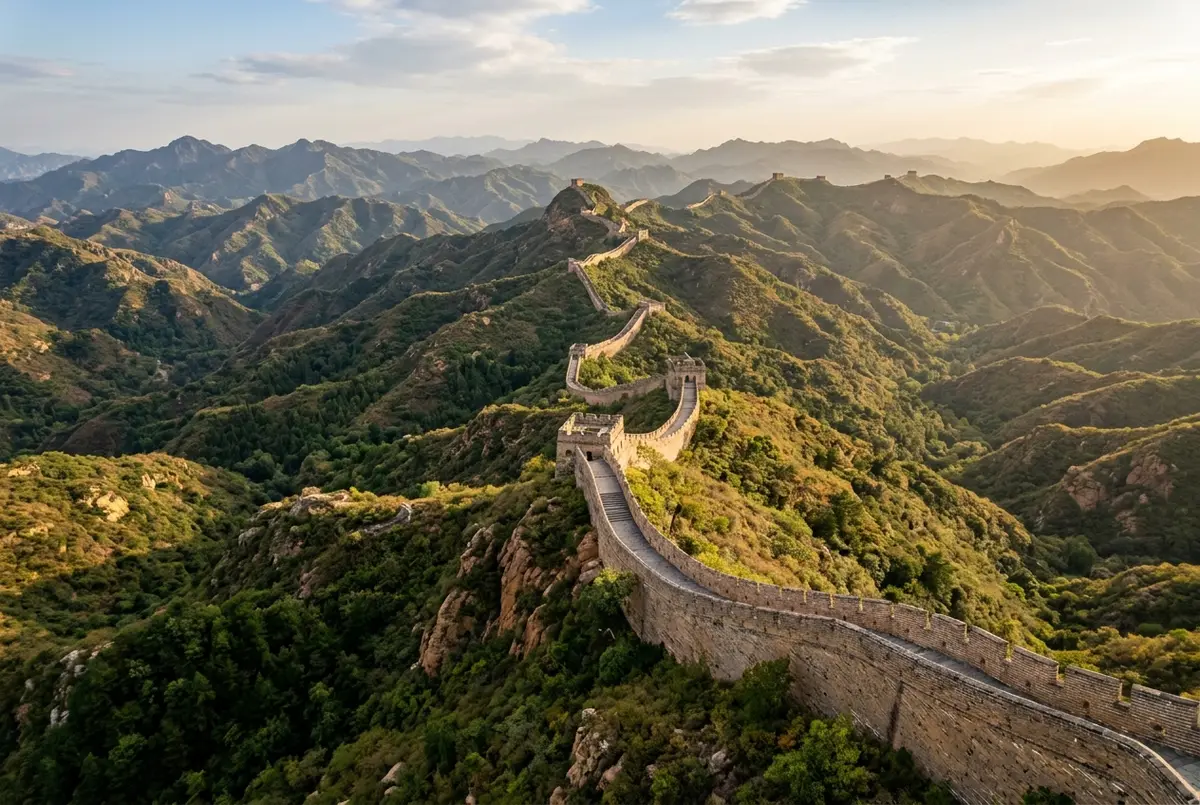
The Great Wall of China sits entirely within northern China, running from Shanhaiguan in Hebei Province in the east to Jiayuguan in Gansu Province in the west. Several restored sections, including Badaling and Mutianyu, sit inside Beijing's outer districts.
 Mutianyu Great Wall Admission Ticket (Optional Cable Car) From $16.90 · Cheapest way onto the Wall See dates
On this page 7 sections
Where is the Great Wall of China? It sits entirely within northern China, arcing from Liaodong in the east to Lop Lake in the west. But if you’re actually planning a trip from Beijing, forget the full arc — what matters is much closer than that. The restored sections sit right inside the city’s own outer districts.
Where the wall actually sits
Source:Beijing Municipal Government and China Daily“Begins in the east at Shanhaiguan in Hebei Province.”
Beijing Municipal Government, 2024 · source
Where is the Great Wall of China located?
The wall sits entirely within northern China, forming an arc from Liaodong in the east to Lop Lake in the west that roughly traces the edge of the Mongolian steppe. It’s not one straight line at all — more a network that bends and twists with the terrain across the whole northern border.
Which provinces does the Great Wall of China cross?
Beijing’s own government describes the wall beginning at Shanhaiguan in Hebei Province and ending at Jiayuguan in Gansu Province, stretching across northern China’s provinces in between. Curious how that full distance adds up? See how long the wall actually is.
Which city is closest to the Great Wall of China?
Beijing, easily. The Badaling section sits about 60 km northwest of the city center, while the Mutianyu section sits further northeast, in Beijing’s Huairou District.
Does the Great Wall of China run near Beijing?
Yes, and not just “nearby” in the loose sense. Several restored sections, including Badaling in Yanqing District and Mutianyu in Huairou District, actually sit inside Beijing’s own outer municipal districts.
Where the tower is, and how to get there
Open in Google MapsWhere do Badaling and Mutianyu sit relative to each other?
Say your hotel’s in central Beijing and you’re torn between the two for a day trip. Badaling is in Yanqing District, about 60 km northwest of central Beijing; Mutianyu is in Huairou District, a separate district to the northeast. They don’t connect by road around the city, so hitting both in one day is basically off the table.
Honestly, I’d pick based on travel time from wherever you’re staying, not on which one sounds more famous. Heading to Mutianyu? The standalone entry ticket covers the gate and the inside shuttle — just not transport there.
| Section | District | Direction from center | Access point |
|---|---|---|---|
| Badaling | Yanqing District | Northwest, about 60 km | Earliest open, most popular |
| Mutianyu | Huairou District | Northeast | Dongzhimen or Qianmen shuttle buses |
Does the Great Wall of China enter North Korea?
No, not even close. The wall’s recorded eastern endpoint, Shanhaiguan in Hebei Province, sits on China’s own Bohai coast — well inside Chinese territory, nowhere near the China–North Korea border.
The whole network stays within China’s own borders, full stop. For more on the structure itself rather than its geography, see the Great Wall of China facts hub.
Questions
Where does the Great Wall of China start and end?
It runs from Shanhaiguan in Hebei Province in the east to Jiayuguan in Gansu Province in the west, per Beijing’s municipal government — more than 20,000 km between the two points.
Which US state is the Great Wall of China located in?
None, it’s nowhere near the US. The Great Wall sits entirely in China, spanning several provinces from Hebei to Gansu.
Can you see the Great Wall of China on Google Maps?
You can spot restored, mapped sections like Badaling and Mutianyu on satellite view. Don’t expect one continuous visible line across the whole country though — most of the historical wall is unmarked or simply gone.
What is the geography of the Great Wall of China?
It follows a mountainous, hilly northern frontier, tracing the edge of the Mongolian steppe from Liaodong to Lop Lake. That’s exactly why so much of the wall climbs ridgelines instead of running flat.